Refrigerator Repair
Understanding Sub-Zero Error Codes: The Four Readings Taken After the Alert
A Sub-Zero alert names what the control noticed, never the part that failed — one temperature alarm has four ordinary causes. Here is what gets measured after the code, and why a cleared panel is the least useful thing in the kitchen.
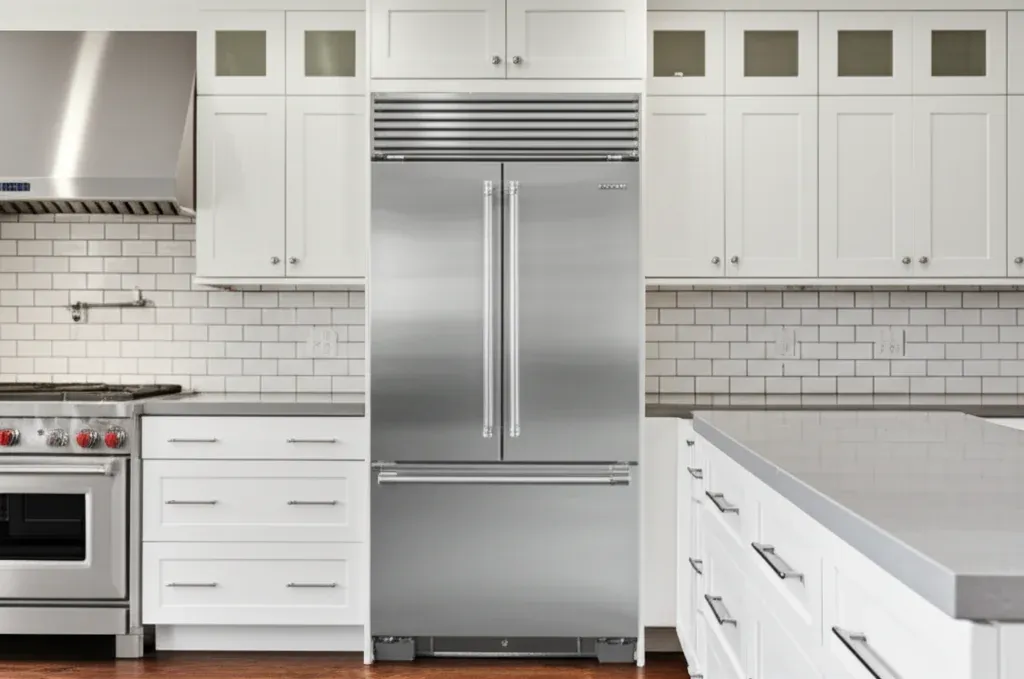
A Sub-Zero alert reports what the control noticed, not what broke. The panel is reading thermistors, door switches and elapsed time, so the most it can honestly say is that a section went out of band, a door stayed open, a cycle did not finish, or an interval elapsed. Which component is responsible is a separate question, and it is answered by four readings taken after the alert rather than by the alert itself. That is why a code interpreted on its own so often costs a part and fixes nothing.
Take the freezer temperature alarm, the most-rung indication on these cabinets. It fires when a box props the door off its seal, when the evaporator fan stops turning, when a defrost cycle stops completing and the coil glazes over, when the condenser is choked and the system cannot reject its heat, and when the sealed system is genuinely down on capacity. Five conditions, one alert, because the control sees the same falling number in all five. Nothing about the message distinguishes them.
Why the panel cannot narrow it for you
There is no sensor on a Sub-Zero that reads “the fan has stopped”. There is a sensor reading the air in the compartment and a control comparing that to a set point over time. Everything upstream of that number — airflow, frost, heat rejection, door seal, refrigerant charge — arrives at the control disguised as the same symptom.
That is also why chasing numeric codes off a forum goes wrong. The numbers differ between the generations of control fitted to these cabinets, and the same figure has meant different things across revisions of one platform. Our reference page on Sub-Zero alerts sets out the indications behaviour by behaviour for that reason, and lists what to write down while the alert is still on screen. This piece picks up where that leaves off: you have the alert, so what now.
The four readings that turn an alert into a diagnosis
What both sections are actually reading, over a day. Not what the display claims. Stand a thermometer in a tumbler of water on a middle shelf, leave it overnight, and read it morning and evening; do the same in the freezer with a probe pushed into a frozen pack. Write the set points next to them. A section three or four degrees adrift is a different fault from a section that has given up, and the alert says nothing about which you have.
How the machine is running. Stand in a quiet kitchen and listen for a minute. A compressor running continuously through the night is not a cooling failure, it is a heat-rejection or load failure, and that points at the condenser, the air path or a seal. A cabinet that is silent while the panel is lit is the opposite case. A unit short-cycling every few minutes is a third. This one reading, given freely down the phone, does more to shape a visit than any code.
Where the frost is. Frost is the most honest thing in the cabinet. A light even coating on the coil in a freezer is normal. A slab that builds on one wall, or ice creeping around the gasket, is airflow or a seal. A coil buried in white while the compartment is warming says defrost is not completing. A freezer that is warm and completely dry says something else again, and the difference matters more than anything the panel prints.
What the condenser and the air path are doing. Take the grille off and look. Dust felted across the fins turns the condenser into an insulator, and everything downstream of that reads as a temperature complaint at the panel — the schedule for that job is covered in the note on how often condenser coils need cleaning. While the grille is off, check the cabinetry is not throttling the intake, and note if the room itself has been unusually hot.
What the reset does, and when to use it
Power-cycle deliberately, once, at the breaker rather than by yanking a panelled cabinet forward on a wood floor. Leave it off for a couple of minutes so the control fully drops, then restore it and let the cabinet run.
What that achieves is narrow and useful: it clears the report so you can see whether the condition is still there. An alert that comes back within a day is live, and the four readings above are what a technician will want. An alert that does not come back may have been a condition report from a power interruption or a door left open during a delivery. What it never achieves is a repair. Repeated resets simply erase the pattern — and the pattern is the part that was worth keeping.
The alert is not always the urgent thing
Two questions decide urgency, and neither is on the panel. Is anything in the cabinet food that will not survive the next few hours, and is the temperature still moving in the wrong direction? A maintenance reminder on a cabinet holding its set points is a job for a weekday. A fresh food section climbing through the forties with a full fridge in it is not, and the urgent call page covers what to do in the first hour.
Between those, most alerts sit somewhere sensible: something is wrong, the cabinet is coping, and the sooner it is looked at the smaller the job. A condenser problem left alone becomes a compressor working harder for longer, which is the difference between a $320 to $650 fan motor and a $980 to $2,130 sealed-system repair.
Handing it over
A visit starts at the $95 service call, and what it buys is measurement rather than interpretation: the control read in its diagnostic mode against the right platform, the sensors checked against their resistance charts, the actual compartment temperatures logged, and the sealed system assessed if the first three do not explain it.
Bring four things to the call and the diagnosis starts before anyone arrives — the exact wording or light pattern, the model and serial from the plate, your two temperature readings, and what the cabinet has been doing at night. If it is already clear the fault is on the cooling side rather than the reporting side, the refrigerator repair page sets out what the visit covers.
Also asked
Does unplugging the refrigerator clear a code?
It clears the report. It does not clear the condition that produced it. Cutting power at the breaker for a couple of minutes resets the control, and if the fault is live the alert returns as soon as the cabinet has run long enough to notice it again — which may be an hour, or may be the following night. That is why the wording gets written down before the reset rather than after it, and why the date the alert first appeared is worth keeping.
Is there a list of Sub-Zero code numbers I can look up?
Not one that is safe to use blind. The same number means different things across the generations of control fitted to these cabinets, and revisions within a generation have changed what a given number reports, so a table copied from the wrong platform sends you at the wrong component with confidence. Match the wording or the light pattern to your model and serial instead — our reference page sets out what each indication is telling you, without the numbers.
The alarm cleared itself overnight. Do I still need somebody?
Not necessarily, but note it. An alarm that clears on its own after a power interruption or a door left open is a condition report, and the cabinet recovering is the system working. What matters is recurrence: the same alert appearing every few weeks with nothing obvious behind it is a genuine fault pattern, and it is far easier to chase with three dates written on a note than with a vague sense that it has happened before.