Ice Maker Repair
Why Your Sub-Zero Ice Tastes Bad: Filter, Bin and Freezer Air
Fridge ice that tastes bad is usually soaking up freezer odors, sitting too long in the bin, or being made from water whose filter is past its six-month interval. Empty and wash the bin, change the filter and throw out the first few batches of new ice.
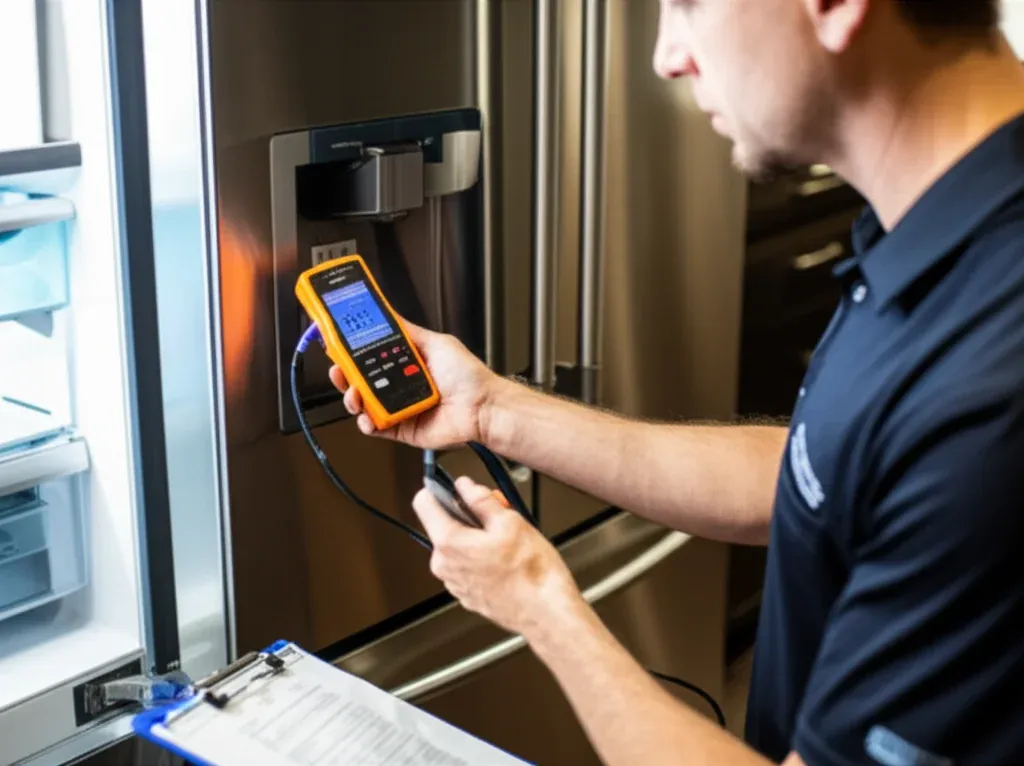
When fridge ice tastes bad, the cause is nearly always one of three things: the cubes have absorbed odors from food in the freezer, they have sat in the bin for weeks, or the water reaching the ice maker passes through a filter that has stopped doing its job. Sub-Zero filters are meant to be replaced about every six months, or sooner when the filter light comes on. Start by emptying and washing the bin, fitting a new filter and discarding the first two or three harvests. If the taste is gone within a day or two, nothing was broken.
This matters more on a panelled built-in than on a freestanding fridge. Many Needham kitchens have integrated Sub-Zero columns or over-under units hidden behind cabinetry, and the filter sits out of sight behind a grille or inside the compartment, so the reminder light is easy to ignore. An ice maker in a freezer drawer can also run for months without anyone looking closely at the bin.
Name the taste before you change anything
The flavor is a useful clue. Let a fresh cube melt in a clean glass and compare it with a glass of cold water from the kitchen tap.
- Stale, fishy or like leftovers: the ice is picking up freezer air. Cubes take on smells readily, and one open container or a forgotten bag of onions can flavor a whole bin.
- Chlorine or a swimming-pool note: the carbon in the filter is spent, or the filter is being bypassed, and the town’s disinfectant is passing straight through.
- Musty, earthy or like a damp cellar: look for growth in the bin, around the fill tube or, on a standalone ice machine, in the drain.
- Plastic or chemical: often a new supply line or a new filter that has not been flushed yet.
- Metallic: an old copper line, a corroding saddle valve, or the water chemistry upstream of the appliance.
If the tap water and the ice taste the same, the issue is the house water and the refrigerator is simply reporting it. If the tap tastes fine and the ice does not, the fault is somewhere between the shutoff valve and the bin.
Old ice and freezer air
Ice is not sealed. Over weeks in the bin, the surface of each cube slowly turns straight to vapor in the cold, dry freezer air, and the cubes shrink, cloud over and take on whatever smells are circulating. In a house that mostly uses ice for guests, a full bin can sit untouched for a month, and those cubes will taste of the freezer however good the water is.
Wrap or cover everything in the freezer, throw out anything that has frosted over, and keep an open box of baking soda in each compartment, swapped every few months. Dump ice that has been sitting longer than a couple of weeks rather than waiting for it to run out. If the household goes through very little ice, switching the ice maker off between gatherings keeps the bin from going stale.
A freezer that runs warm makes all of this worse. Cubes that partly melt and refreeze fuse into clumps, trap odors and taste flat. If the bin is full of welded ice, or the ice cream has gone soft, the temperature fault comes first, and that belongs with freezer repair rather than with the filter.
The water filter: interval and warning signs
For the ice maker, the filter does two jobs. Its carbon removes chlorine and many of the compounds behind off flavors, and the cartridge catches sediment before it reaches the water valve. Once the carbon is saturated the taste comes back gradually, which is why most owners notice only when the ice is plainly wrong. Changing it on a schedule is easier than waiting for your tongue to tell you.
A filter that is clogged, rather than merely spent, shows up in the ice itself. Flow to the ice maker drops, the mold never fills completely, and you get small cubes, hollow cubes, thin slivers or a bin that fills far more slowly than it used to. The shape of a cube says a lot, and our guide to reading cloudy and hollow cubes explains what each one points to.
The wrong filter causes its own trouble. A cartridge that does not seat fully can let water flow around the media, so the ice tastes of chlorine even with a brand-new filter installed. Poorly made look-alike cartridges may also weep at the housing or shed carbon dust that leaves grey specks in the cubes. Buy the cartridge listed for your model and make sure it turns or clicks fully home. If a previous owner fitted a bypass plug where the filter should be, the ice maker is running on unfiltered water, and the taste will show it.
Clearing the taste in one afternoon
- Switch the ice maker off and empty the bin completely.
- Wash the bin in warm water with a little mild soap, rinse it thoroughly and let it dry. Skip bleach and strong cleaners, which leave a taste of their own.
- Wipe the freezer walls and the area around the bin with a cloth dampened in a baking soda solution, and clear out anything that smells.
- Fit a new water filter and write the date where you will see it.
- Turn the ice maker back on and throw away the first two or three harvests, which flush the new cartridge and the line. On a unit with a water dispenser, run a few glasses through it first.
- Wait a full day, then taste a fresh cube.
If the taste survives a clean bin, a new filter and fresh ice, stop swapping parts and look further back along the supply.
When bad ice points to a repair
A few causes sit beyond easy reach. A plastic supply line that has aged can taint the water, and a slow drip at a fitting behind a panelled unit can keep the cavity damp enough for mildew. A water valve that sticks partly open overfills the mold and spills into the bin, where the water freezes into a solid block that holds odor. Standalone clear-ice machines in pantries and bars have a drain, and a sluggish drain lets water stand and turn musty. A worn door gasket lets humid kitchen air into the freezer, adding frost and giving smells more moisture to travel on.
None of these is a reason to replace a built-in refrigerator. As typical ranges, with the firm figure given after diagnosis, an ice maker, water valve or supply line repair runs $280–$650, and a door gasket or seal replacement $280–$770. The visit is a flat $95 that includes the whole diagnosis and comes off the repair bill if you decide to proceed. Sub-Zero Repair Needham is an independent service that fits factory-approved parts, working in Needham Heights, Needham Center, Dover and Westwood. Call (617) 610-6886, or read about ice maker repair to see the faults we handle.
Also asked
How often should the water filter be changed in a Sub-Zero refrigerator?
About every six months on most Sub-Zero models, or sooner if the filter indicator lights or the ice starts to carry a chlorine note. Heavy ice use or sediment in the house water can shorten that. Write the change date somewhere visible, because a cartridge tucked behind a grille is easy to forget.
Why does my ice still taste bad after I put in a new filter?
Usually the old ice and the bin are still holding the flavor, or the new cartridge has not been flushed. Empty and wash the bin, discard the first two or three harvests and give it a day. If a chlorine taste lingers, confirm the cartridge is the right one for your model and fully seated, since a loose filter lets water slip past the carbon.
Why does the ice taste bad when the tap water tastes fine?
Then the fault lies between the shutoff valve and the bin. The usual suspects are freezer odors absorbed by old cubes, a spent or bypassed filter, and a dirty bin. Less often it is an aging supply line, a water valve that sticks, or a slow drain on a standalone ice machine that lets water stand.
Does baking soda really help with ice that tastes like the freezer?
It helps a little, but only once the source is gone. An open box takes some odor out of the circulating air and should be swapped every few months. It cannot rescue cubes that have aged in the bin for weeks, so cover the food and dump the old ice first.
What does it cost to fix an ice maker that makes bad-tasting ice?
Most cases need only a new filter and a cleaning, both jobs you can do yourself. When a part is to blame, an ice maker, water valve or supply line repair typically falls in the $280–$650 range, with the firm price given after diagnosis. The $95 visit includes that full diagnosis and counts toward the bill if you go ahead.